Metrc vs a CRM: What Each One Does for a Cannabis Brand
Metrc is the track-and-trace software many state cannabis regulators require licensees to use to follow cannabis from seed to sale. A CRM tracks the stores and buyers a brand sells to, plus its deals and follow-up. In a Metrc state, a cannabis brand usually needs both, Metrc for the state’s records and a CRM for selling.
This is not legal advice. This post sums up what Metrc and the state regulator pages linked below say, checked in November 2026. Ask your attorney and your state regulator what your license requires.
What is Metrc?
Metrc is a company whose platform combines software, radio-frequency identification (RFID) tags and a support team “to track and trace cannabis from seed to sale,” according to Metrc’s website. Metrc says it built Colorado’s track-and-trace system in 2011.
A state picks Metrc and then sets the rules for using it. In California, the Department of Cannabis Control (DCC) describes the California Cannabis Track-and-Trace (CCTT) system as one “all licensees are required to use to track cannabis from seed to sale,” built through its partnership with Metrc. The DCC track and trace page says the system “records and monitors the movement, transfer, and status of cannabis goods.”
Each tracked plant or package gets a Metrc tag. Metrc’s tag guide says each tag shows the facility’s license number and a unique identifying number (UID) used to find the item in Metrc.
What does Metrc track?
Metrc tracks product, and its movement between licensees, for the state. The Oklahoma Medical Marijuana Authority (OMMA) gives a concrete picture on its seed-to-sale page, which covers:
- Plant counts, product types and license numbers
- Tagged products, including test results and certificates of analysis (COAs)
- Transfer manifests, with batch numbers, for product moving between licensees
- Dispensary sales, and the disposal of untagged products
- Zero-inventory reports, due by the 15th of each month
California’s rules add rejections. Under section 15052.1 of the DCC regulations, a licensee that rejects all or part of a shipment records the reason in the track and trace system.
Which states use Metrc?
As of November 2026, Metrc’s partners page lists Alabama, Alaska, California, Colorado, the District of Columbia, Guam, Illinois, Kentucky, Louisiana, Maine, Maryland, Massachusetts, Michigan, Minnesota, Mississippi, Missouri, Montana, Nevada, New Jersey, New York, Ohio, Oklahoma, Oregon, Rhode Island, South Dakota, the US Virgin Islands, Virginia and West Virginia. It lists Colorado Industrial Hemp as a separate partner.
That list shows which governments work with Metrc. Your regulator decides who must use it and how.
Who has to use Metrc?
In the three Metrc states we checked, the regulator requires every licensee to use it.
| State | What the regulator says | Source |
|---|---|---|
| California | CCTT is the system “all licensees are required to use.” | DCC compliance hub |
| Oklahoma | “All commercial licensees are required to be credentialed in Metrc,” including businesses with zero inventory. | OMMA seed-to-sale page |
| New York | “Effective December 17, 2025, all active licensees” must be credentialed in Metrc. | Office of Cannabis Management |
The requirement comes with the license. If a licensed partner grows, makes or distributes your products, agree up front on the track-and-trace details it will share with you, such as transfer dates and package IDs.
What does a CRM do that Metrc does not?
A CRM handles selling. It tracks who the buyer is, which stores they buy for, where each deal stands, and the next step for each rep. The Metrc and regulator pages above describe compliance tracking, and they do not list sales tools such as buyer contacts, deal stages or email campaigns.
Our guide to what a cannabis CRM is covers the sales side in detail, and how to sell to dispensaries walks through the sale itself.
Metrc vs a CRM, task by task
| Task | Where it belongs | Why |
|---|---|---|
| Tag a plant or package | Metrc | Tags come from Metrc and carry the UID the state tracks. |
| Record a transfer to a store | Metrc | The manifest is the state’s record of the move. |
| Record a sale at the store | Metrc, often through the store’s POS | Metrc says a POS can send each sale’s details to Metrc. |
| Attach COAs to a package | Metrc | OMMA ties COAs to tagged product. Keep a copy on the store deal for buyers. |
| Know who the buyer is | CRM | Reps need each buyer’s name, email and phone. |
| Link one buyer to several stores | CRM | One buyer often buys for a group of stores. |
| Move a store from samples to first order | CRM | Pipeline stages give each deal an owner and a next date. |
| Remind a rep when a store goes quiet | CRM | Workflows send the reminder. |
| Email buyers about a launch | CRM | Campaigns go to the buyers you pick. |
| Report a New York store that is late on a credit purchase | Metrc | OCM moved this reporting into Metrc on September 15, 2026. |
| Keep the store’s license number | Both | Use the same number in both so records match. |
Your state’s rules set the details for your license type.
How a brand uses Metrc and a CRM together
New York shows where the two systems meet. The Office of Cannabis Management (OCM) says “licensed retailers who purchase cannabis products on credit must pay the bill within 30 days of the cannabis product being received in Metrc.” A first order there runs like this:
- The buyer says yes. The rep moves the store’s deal to Ordered in the CRM.
- The licensee shipping the order creates the transfer in Metrc, and the store receives it there.
- The invoice goes out with a due date counted from the day the store received the product in Metrc.
- A workflow emails the buyer before the due date and gives the rep a call task if the deal sits in an Invoiced stage too long.
- If the store does not pay, OCM says the supplier must notify the Office and the retailer of the default within 7 calendar days of the final payment date. That report now goes through Metrc.
Our guide to wholesale invoicing for cannabis brands covers terms and late payments, and keeping dispensaries reordering covers what comes after the first order.
Does HighDay connect to Metrc?
No. HighDay does not replace Metrc and does not connect to it. Keep using Metrc, and any compliance software your state allows, for everything the state requires.
Metrc says it offers an open API for third-party software and keeps a Validated Integrators directory of approved POS, ERP and other vendors, according to its integrations article. If you want software to handle compliance, start with that directory for your state.
HighDay is connected to Canix, which calls itself an ERP for cannabis cultivators, manufacturers and distributors, and GrowFlow, which describes its products as seed-to-sale software. It is also connected to LeafLink for wholesale orders and CannaSpyglass for state license data and owner contacts. See the integrations page.
How HighDay helps with the sales side
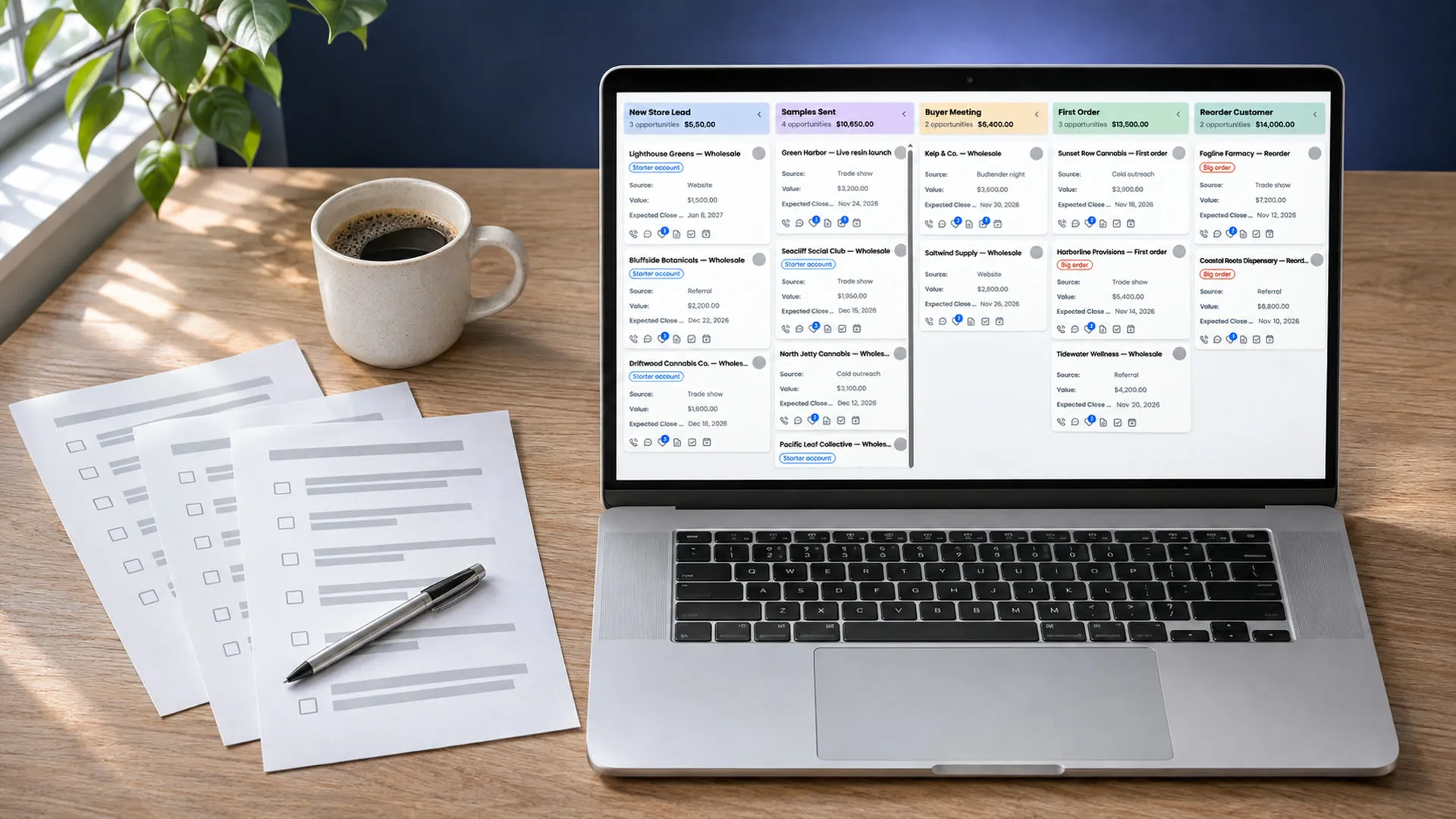
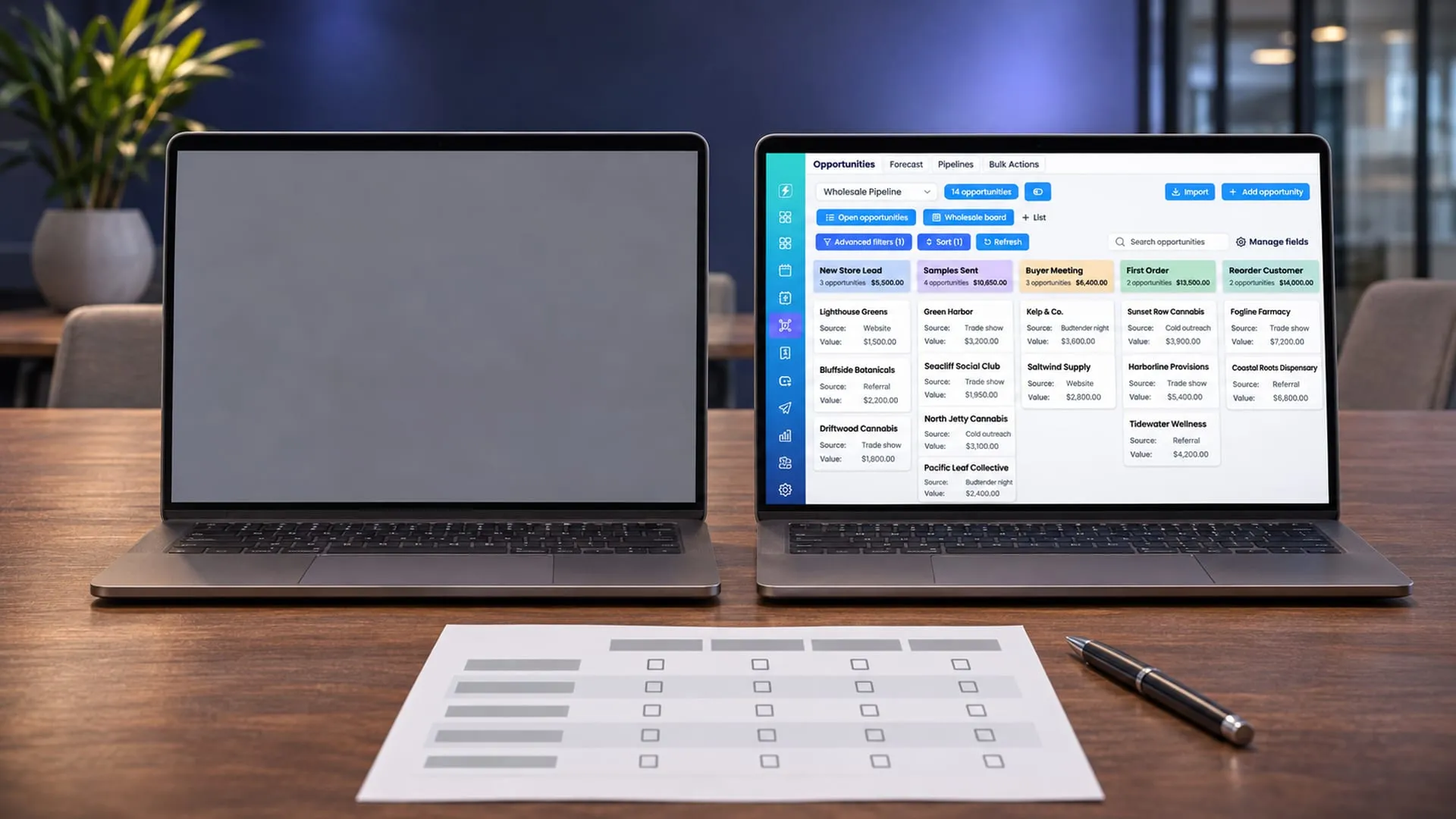
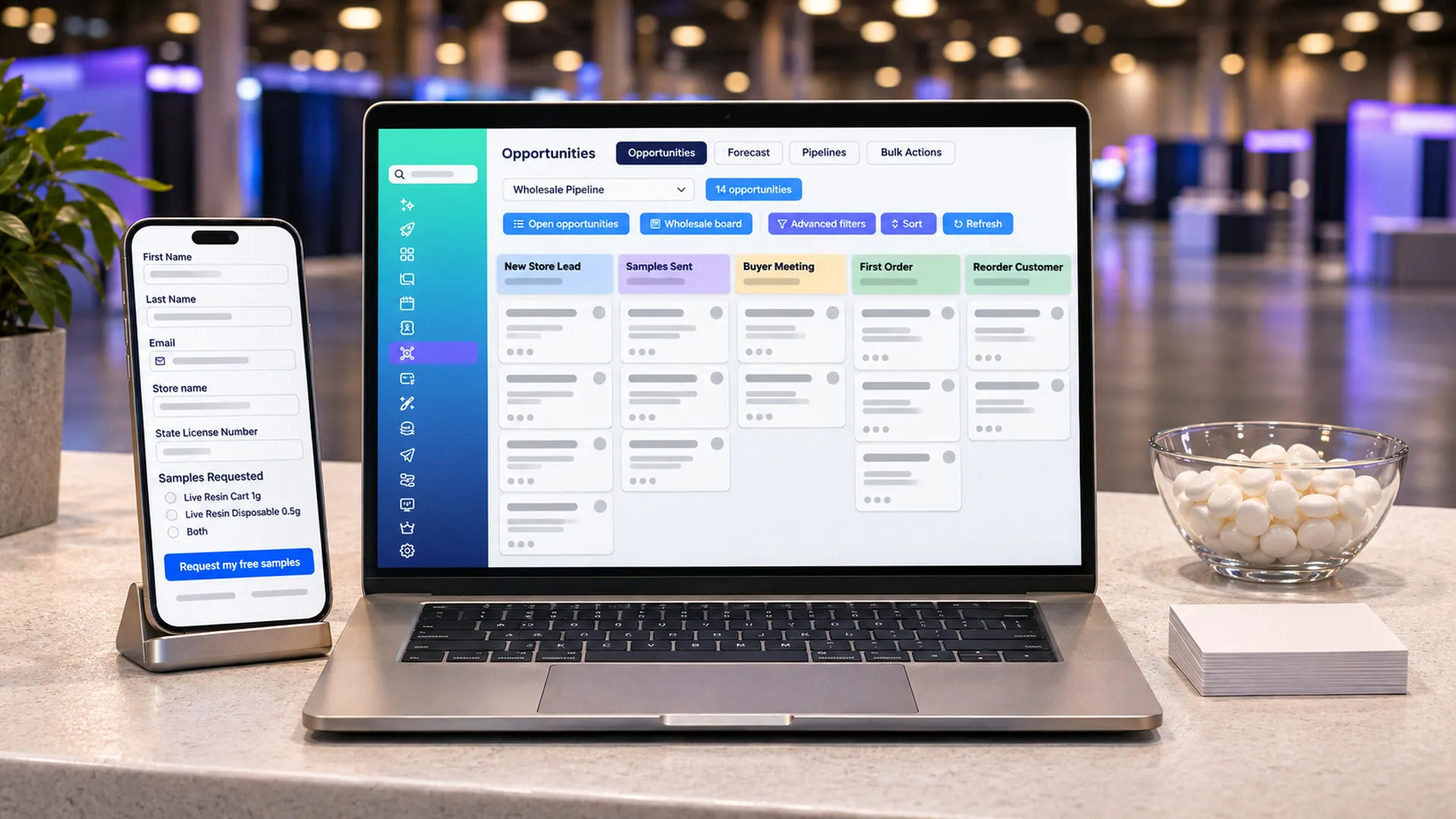
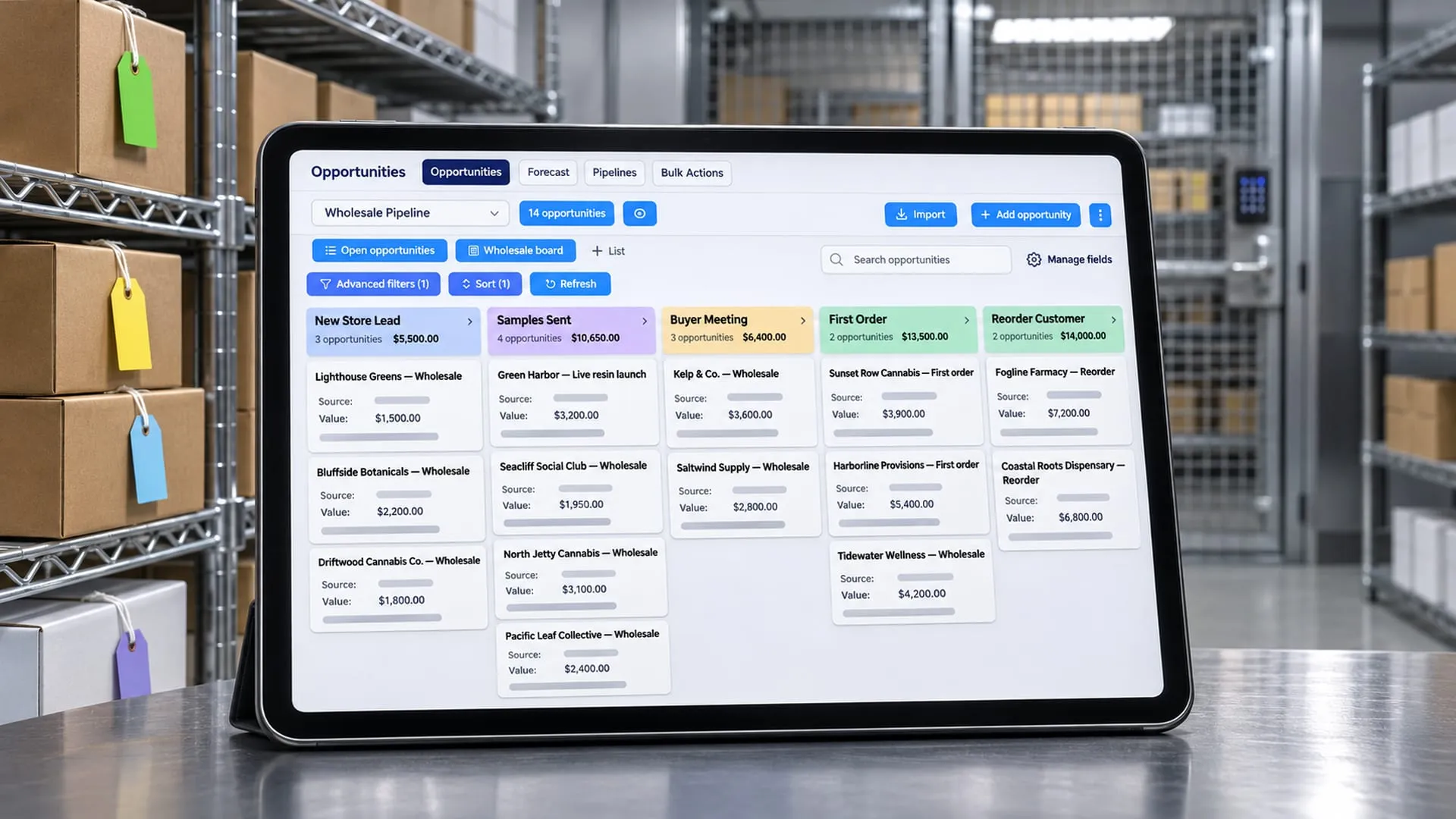
HighDay is a cannabis CRM for cannabis and hemp brands, ancillary companies and dispensaries. You can run it in plain English. For the selling work that sits outside Metrc, the Brands & Ancillary plan includes:
- Store accounts. Each store is a company record with a State License Number field, so it can match the license on your transfers.
- Buyers. Link one buyer to every store they buy for, with the label Buyer.
- Pipelines. Sales pipelines with stages you name, plus a sales forecast by rep.
- Workflows. More than 100 triggers and 150 actions, such as “deal sits too long in a stage,” in workflows that send emails and create tasks.
- Ask AI. Type a request such as “Add Dana Ruiz as the buyer at our new Buffalo account, tag her New York, and add a note that she wants samples.” HighDay shows an approval card before each change.
- Trainings and events. Courses for budtenders, and events with tickets and RSVPs.
- Invoices and payments, with gateways such as Authorize.net and NMI for high-risk merchant accounts.
The platform page lists everything.
Who HighDay is not right for
- Teams that need seed-to-sale software. HighDay does not track plants or packages.
- Dispensaries that need a POS. HighDay is not a point-of-sale system.
- Solo sellers who are happy on a free CRM. You may not need a paid CRM yet.
- Teams that need route optimization or GPS tracking. Reps plan routes in their map app.
- Brands that want to text buyers. Brands cannot text from HighDay. Texting is part of the dispensary plan.
Comparing tools? Use our 10 questions to ask before you choose a cannabis CRM.
Try HighDay for 14 days for $4.20. After the trial, the Brands & Ancillary plan is $297 a month plus a $297 one-time setup fee. See plans, watch the demo or book a call.
Frequently asked questions
What is Metrc used for?
Metrc is track-and-trace software that states use to follow cannabis from seed to sale. Licensees use it to tag plants and packages, record transfers between licensees and report to the state, as the California and Oklahoma regulators describe.
Is Metrc a CRM?
No. Metrc describes its job as tracking cannabis from seed to sale. A CRM tracks buyers, store accounts, deals and follow-up. A licensed brand in a Metrc state uses Metrc for the state and a CRM for selling.
Do cannabis brands have to use Metrc?
In Metrc states, the regulator sets the rule. California, Oklahoma and New York require all licensees to use it or be credentialed in it. If you sell through a licensed partner, ask your attorney and your regulator what applies to you.
Which states use Metrc?
Metrc’s partners page lists more than two dozen states and territories as of November 2026, from Alabama to West Virginia, plus a Colorado Industrial Hemp partner. Check your regulator’s site for the system your state uses.
Does HighDay integrate with Metrc?
No. HighDay does not connect to Metrc and does not replace it. HighDay is connected to Canix, GrowFlow, LeafLink and CannaSpyglass. Contact us with questions about your setup.
Does Metrc track hemp?
Metrc’s tag guide includes a hemp classification, and its partners page lists Colorado Industrial Hemp. Hemp rules differ by state and are changing at the federal level. See our hemp THC ban guide.